The dog cataract surgery cost that US sources publish runs to several thousand dollars per eye. However, the published figures differ a lot from one source to the next. This guide explains what cataracts are, what the surgery involves, what the bill covers, and how pet insurance treats it.
Cataracts in Dogs: Causes and How Surgery Works
A cataract is a cloudy area in the lens of the eye. Cornell University’s Riney Canine Health Center defines it as “any focal or diffuse opacity of the normally transparent lens.” As a result, less light reaches the retina and vision fades.
The American College of Veterinary Ophthalmologists (ACVO) puts it plainly: “Most cataracts in dogs have a hereditary basis.” Injury, inflammation inside the eye, and body-wide diseases can also cause them. In fact, ACVO calls diabetes the most common disease associated with cataracts in dogs. According to Cornell, about 75% to 80% of diabetic dogs develop cataracts within the first year of their diagnosis.
No drop or supplement fixes the problem. ACVO says there is no proven medical treatment that reverses, slows, or prevents a cataract. Surgery is therefore the only known treatment, and it often returns functional vision.
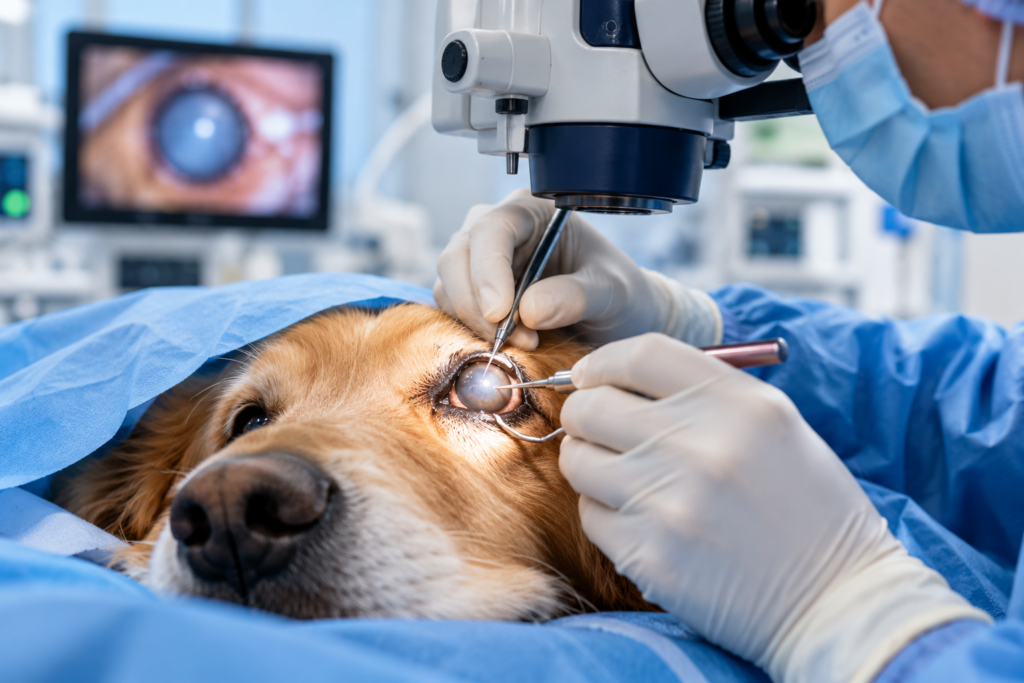
The operation is called phacoemulsification, and it is done under general anesthesia. Cornell describes the steps this way:
- First, the surgeon makes small incisions in the cornea and the lens capsule.
- Then, high-frequency vibration breaks up the cloudy lens, and a vacuum removes it.
- Next, the surgeon inserts an artificial lens.
- Finally, the surgeon sutures the cornea closed.
Dog Cataract Surgery Cost: Per Eye and Both Eyes
There is no single national price, so it helps to compare several published ranges. The figures below come from two insurers and one financing company’s study.
| Source | Figure quoted | What it refers to |
|---|---|---|
| Lemonade | $2,500 to $4,000 | Average range per eye |
| MetLife Pet Insurance | $4,900 to $5,500 | A single eye |
| MetLife Pet Insurance | $5,600 to $6,700 | Both eyes |
| CareCredit 2023 study, as cited by MoneyGeek | About $3,600 | Average cost |
| CareCredit 2023 study, as cited by MoneyGeek | $2,000 to $5,800 | Range of prices |
Lemonade and MetLife therefore publish different ranges, and neither source explains the gap. Each one does, however, name the factors that move its own figure.
According to Lemonade, a larger dog means you pay more for anesthesia. In addition, your dog may need an overnight hospital stay, and prices vary between ophthalmology practices. MetLife says its costs vary with the dog’s overall health, your location, the vet, and the severity of the cataracts. They also depend on whether you treat one eye or both.
Lemonade also suggests requesting quotes from multiple practices. So ask each clinic for a written estimate for one eye and for both.
What the Dog Cataract Surgery Cost Usually Includes
A quote is easier to compare once you know what is in it. According to MetLife, its price ranges generally include:
- Preoperative diagnostics, such as an electroretinogram, gonioscopy, and ocular ultrasound
- General anesthesia
- Surgical removal of the cataract
- Postoperative treatment
- Hospitalization
- Medications
The pre-surgical tests matter, because they check the back of the eye. Cornell explains that an ocular ultrasound rules out retinal detachment. Meanwhile, the electroretinogram (ERG) shows whether the retina works properly.
The University of Illinois College of Veterinary Medicine adds that a dog must have full blood work before surgery. It may also need a dental cleaning first. So check whether the quote counts these items.
Aftercare is the part owners tend to underestimate. Cornell says at-home care involves several eye drops given four to six times daily. Follow-up exams are also frequent in the early post-operative period, and routine eye exams continue for life. In addition, MetLife says eye drops and oral medications typically continue for 3 to 4 weeks after surgery. MetLife also warns that further visits, procedures, or other care may bring additional costs.
Success Rates and Alternatives to Surgery
The published results are generally good. For ideal surgical candidates, Cornell says the reported success rate is as high as 80% to 90%. MetLife similarly cites a long-term success rate of 85% to 90%.
Still, complications happen. According to Cornell, the most common ones are prolonged inflammation inside the eye and glaucoma. Corneal ulcers, infection, and retinal detachment are also possible.
Some dogs are not good candidates, and some owners cannot afford the operation. In that case, monitoring still matters. Cornell therefore suggests asking your vet about anti-inflammatory eye drops and a glaucoma pressure check every four to six months.
The University of Illinois notes that untreated cataracts can keep growing and that the dog will likely go blind eventually. However, it also says a dog can still have a great life without vision. A sudden red, painful, or squinting eye is an emergency, so go to a vet right away.
How Pet Insurance Treats Cataract Surgery
Cataract surgery is an illness claim, so an accident-only plan will not help. According to MoneyGeek, most accident and illness policies cover it when the condition is not pre-existing. Three issues decide most claims.
First, timing. Lemonade says, as of 2026, that cataract treatment will not be covered if signs or abnormal test results appear before you enroll or during the illness waiting period. A cloudy look to the eyes counts as a sign, even without a diagnosis. It helps to read how insurers define pre-existing conditions and how long waiting periods last.
Second, heredity. Because most canine cataracts are hereditary, the policy’s hereditary condition wording matters. MoneyGeek reports that ASPCA, Healthy Paws, and MetLife include cataract surgery in standard plans without a hereditary rider. It also reports that AKC, Liberty Mutual, and Nationwide require add-ons for hereditary conditions. Insurer terms change, so confirm this in your own policy.
Third, diabetes. MoneyGeek says pets with diabetes or other conditions linked to cataract formation need comprehensive coverage. It also advises enrolling before symptoms appear to avoid pre-existing condition exclusions. Ask the insurer in writing how it handles diabetic cataracts, and review the usual policy exclusions as well.
When a claim is approved, you still pay your share. MoneyGeek notes that most insurers reimburse 60% to 90% of covered costs after the deductible.
Bottom Line: Dog Cataract Surgery Cost and Coverage
The dog cataract surgery cost varies widely between sources. Published figures run from $2,500 to $4,000 per eye at Lemonade to $5,600 to $6,700 for both eyes at MetLife. Therefore, ask for an itemized estimate that lists the ERG, ultrasound, anesthesia, hospitalization, drops, and rechecks.
Insurance can help, but only if the policy started before any eye signs appeared. Also check the hereditary condition terms before you rely on it. If surgery is not possible, a monitoring plan with your vet still protects your dog’s comfort.
Frequently Asked Questions
How much is cataract surgery for a dog in one eye? Lemonade puts the average at $2,500 to $4,000 per eye. MetLife, however, quotes around $4,900 to $5,500 for a single eye.
Can eye drops cure cataracts in dogs? No. ACVO states that no proven medical treatment reverses, slows, or prevents cataracts, and that some promoted products make them worse. Instead, Lemonade notes that a vet may prescribe anti-inflammatory drops to reduce inflammation and pain. Owners also give drops after surgery.
Do all diabetic dogs get cataracts? Not all. However, according to Cornell, about 75% to 80% of diabetic dogs develop cataracts within a year of diagnosis.
Is the dog cataract surgery cost covered by pet insurance? Often, yes, under an accident and illness plan. However, Lemonade notes that signs seen before enrollment or during the waiting period make the condition pre-existing. Hereditary condition rules also vary by insurer, so read your policy.
Sources referenced: Cornell Riney Canine Health Center, ACVO, University of Illinois College of Veterinary Medicine, MetLife Pet Insurance, Lemonade, MoneyGeek