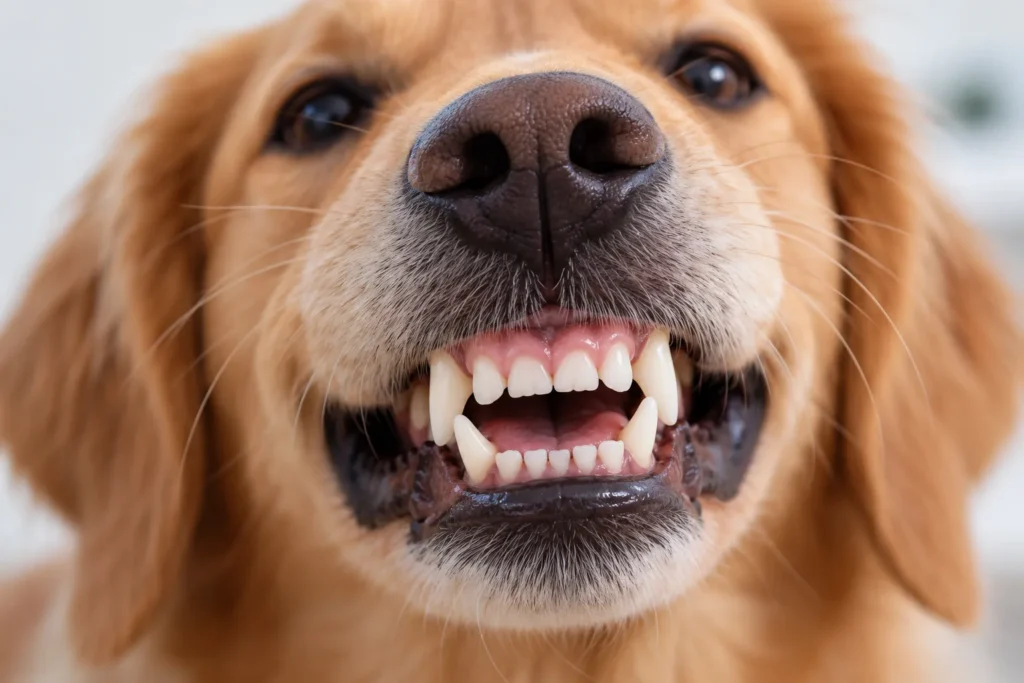
Dental disease in dogs is, by a wide margin, the most common health issue veterinarians see, and it’s also one of the most preventable, at a fraction of the cost of treating it once it’s advanced. Understanding how it progresses makes the case for prevention almost self-evident.
How Common Is Dental Disease in Dogs, Really?
Most dogs have some evidence of periodontal disease by the age of three, according to the AVMA, and MedVet likewise notes that most pets show signs of it by early adulthood, making it one of the most common conditions seen in small-animal practice. Many pets show no obvious symptoms in the early stages, which is exactly why it goes untreated for so long in so many dogs.
How Dental Disease in Dogs Actually Develops
The process starts small. Plaque, a sticky, bacteria-laden film, forms on tooth surfaces within just 24 hours of the last brushing. Left alone, it hardens into tartar, the visible brownish-yellow buildup owners notice, which looks unsightly but isn’t actually the main problem. The real damage happens from plaque hiding below the gumline, where bacteria trigger an ongoing immune response that gradually breaks down bone and the ligament structures holding teeth in place.
The Four Stages, and Why the Distinction Matters Financially
Understanding this progression matters most: only Stage 1 is reversible. Everything beyond that causes permanent structural damage that vets can manage, but not undo.
Stage 1: Gingivitis (Reversible)
Gums appear red, inflamed, and mildly swollen, often with noticeable bad breath. At this stage, a professional cleaning combined with consistent home brushing can fully reverse the condition. This is the only point in the disease’s progression where that’s true.
Stage 2: Early Periodontitis
Inflammation and infection begin extending below the gumline, starting to affect the structures that support the teeth. Damage from this point forward becomes permanent, though further progression can be slowed and managed with proper care.
Stage 3: Moderate Periodontitis
More significant bone and attachment loss develops around the affected teeth, with a real risk of tooth mobility and increasing discomfort, even though dogs often continue eating normally, masking how much pain may actually be present.
Stage 4: Advanced Periodontitis
Severe bone loss sets in, often with loose or already-lost teeth, typically requiring extractions as part of treatment. This is where cost and treatment complexity peak.
What Treatment for Dental Disease in Dogs Costs, by Severity
The financial gap between catching this early and letting it progress runs dramatic:
| Situation | Typical Cost |
|---|---|
| Routine cleaning, no extractions (Stage 1, caught early) | $300–$700 |
| Cleaning with some extractions | $700–$1,300+ |
| Advanced periodontal treatment (Stages 3-4, specialist care) | $1,000–$3,000+ |
| Full-mouth extraction, severe cases | $1,500–$3,000 |
A real claims example illustrates this at a smaller scale: a 7-year-old dog needing a single tooth extraction for periodontal disease was billed over $600 for that procedure alone, and that’s for one tooth, not a full-mouth case.
The Prevention Side: What It Actually Costs
Compared to the treatment costs above, basic preventive dental care runs inexpensive:
- Pet-safe toothbrush and toothpaste: $10-$20 (one-time/occasional replacement cost).
- Dental chews or toys: $5-$30 per month.
- Daily or weekly brushing: free, aside from the toothbrush/toothpaste cost, just time.
- Annual professional cleaning: $300-$700 (the routine, no-extraction scenario from the table above).
The math stays about as clear as preventive care gets: a $10-$20 toothbrush and a few minutes of daily brushing is what stands between many dogs and a $1,500-$3,000 advanced treatment bill years later.
How Often Should Professional Cleanings Happen?
MedVet and the AVDC recommend that cats and small dogs begin routine preventive periodontal care at one year of age, while large breed dogs should start at two. From there, every pet should get a complete oral evaluation with dental imaging at least every 12 months, with some adjustments based on individual risk:
- Small and toy breeds, and dogs prone to rapid tartar buildup, may need cleanings every 6 months.
- Large, dental-healthy breeds with consistent home brushing might stretch to 18-24 months between cleanings.
- Starting professional cleanings early is specifically recommended to prevent more expensive disease from establishing in the first place.
Which Breeds Face Higher Risk of Dental Disease
- Small and toy breeds — Yorkshire Terriers, Chihuahuas, Dachshunds, Pomeranians, Shih Tzus, and Cavalier King Charles Spaniels appear frequently in dental disease statistics, often due to crowded teeth relative to jaw size.
- Brachycephalic breeds — Pugs and similar flat-faced breeds, where jaw shape and dental crowding compound the risk.
- Certain larger breeds — Boxers, Great Danes, Mastiffs, Bulldogs, and Collies sometimes show genetic predisposition as well.
If your dog falls into one of these higher-risk categories, a 6-month professional exam schedule, rather than annual, is a reasonable conversation to have with your vet, even before symptoms appear.
Why Anesthesia-Free Cleaning Isn’t a Real Substitute
Anesthesia-free dental cleaning (AFDC) removes visible tartar from the crown surfaces of teeth, but it cannot address subgingival disease, the below-the-gumline damage where most periodontal harm actually occurs. The American Veterinary Dental College (AVDC) does not recommend AFDC as a substitute for anesthesia-assisted professional cleaning, and it also tends to stress out many dogs without providing the diagnostic or treatment benefit of a proper anesthetic cleaning with X-rays.
Warning Signs Worth Watching For
- Persistent bad breath.
- Red or swollen gums.
- Visible tartar buildup.
- Dropping food while eating, or reluctance to chew on one side.
- Pawing at the mouth.
Since many dogs show no symptoms in the earlier, still-reversible stage, waiting for these signs to appear often means the disease has already progressed past the point of full reversal. That’s exactly why scheduled annual (or more frequent) exams matter more than waiting for visible discomfort.
Does Pet Insurance Cover Dental Disease in Dogs?
This point deserves precision, since it splits into two very different categories. Standard accident-and-illness policies don’t cover routine or preventive dental cleanings; those require a wellness add-on, typically available for $50-$100/year through most major insurers. Standard policies generally do cover dental illness, though: tooth infections, abscesses, extractions caused by disease, and fractures from trauma. That means the more expensive, disease-driven treatment scenarios described above are typically covered even without a wellness add-on, as long as the condition wasn’t already present before your policy started. Our guide to common pet insurance exclusions covers how this dental split works across providers in more depth.
Bottom Line on Dental Disease in Dogs
Dental disease in dogs runs close to universal: most dogs show signs by age three. It’s also one of the more genuinely preventable conditions in veterinary care. Only the earliest stage is reversible, which means the entire financial argument for prevention comes down to timing. A $10-$20 toothbrush and consistent home care, paired with annual (or semi-annual for higher-risk breeds) professional cleanings starting as early as age 1-2, costs dramatically less than the $1,500-$3,000+ bill that advanced, unaddressed disease eventually generates.
Frequently Asked Questions
Can I reverse my dog’s dental disease with just brushing at home? Only if it’s still Stage 1 (gingivitis). This is the one stage that’s fully reversible with a combination of professional cleaning and consistent home brushing. Once it progresses to Stage 2 or beyond, the damage becomes permanent, though further progression can be slowed.
Is anesthesia-free dental cleaning a safe way to save money? The AVDC doesn’t recommend it as a substitute for anesthesia-assisted cleaning, since it can’t address the below-the-gumline disease where most periodontal damage actually occurs. It only removes visible surface tartar.
Does pet insurance cover a tooth extraction needed because of periodontal disease? Generally yes, under standard accident-and-illness coverage, since it treats dental illness rather than routine preventive care, as long as the condition wasn’t already present or diagnosed before your policy started.
Sources referenced: AVMA, MedVet, and AVDC (2026 reporting).