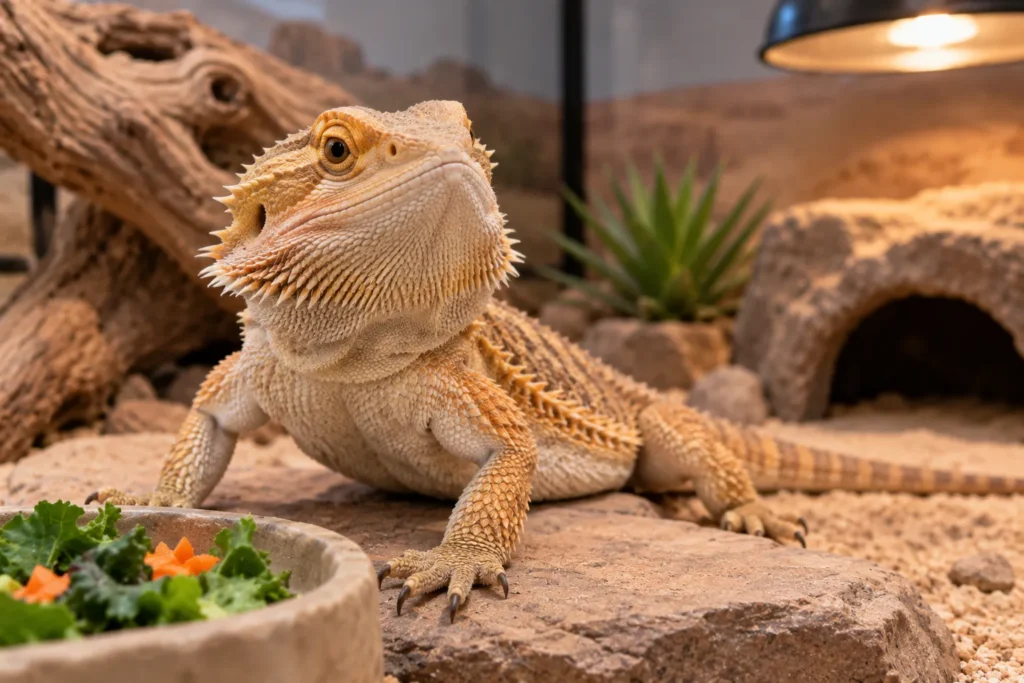
Bearded dragons have a reputation for being low-maintenance pets, and in terms of daily care, that’s largely true. But when it comes to bearded dragon vet costs, an important nuance is worth understanding upfront: the large majority of health problems seen in bearded dragons trace back to preventable husbandry mistakes. That means most of the cost picture below actually stays within an owner’s control.
Routine Exam Costs
A standard bearded dragon wellness exam, including a physical assessment, weight check, body condition evaluation, and a husbandry/diet discussion, typically runs $100-$180 at exotic veterinary clinics, according to one exotic-vet cost guide, depending on region and clinic. Annual visits including a fecal test and basic bloodwork commonly total $100-$300.
One cost-conscious detail worth knowing: it’s often worth paying toward the higher end ($75-$100) for a vet who is board-certified in exotic animal medicine or has extensive reptile-specific experience, rather than defaulting to the cheapest general practice option. The extra $25-$50 typically reflects better diagnostic skill and familiarity with reptile-specific conditions that a general vet might miss, and reptiles hide illness well enough that a missed early sign can turn into a much more expensive problem later.
The #1 Health Issue: Metabolic Bone Disease (MBD)
This condition deserves top billing because it ranks as both the most common serious health issue in pet bearded dragons and one of the most preventable. Washington State University’s veterinary teaching hospital confirms that MBD is typically caused by calcium deficiency, inadequate UV-B lighting, improper diet, or a combination of these factors, leading to weakened bones and, in advanced cases, visible skeletal deformity. Treatment cost runs $200-$500 or more, but a different number matters more here: proper husbandry, correct UVB lighting (replaced every 6 months, since UVB output degrades over time even when the bulb still visibly “works”), a basking spot in the correct temperature range, and calcium-dusted insects as a dietary staple, prevents an estimated 80%+ of all bearded dragon health problems, MBD very much included.
Bearded Dragon Vet Costs by Common Condition
| Condition | Typical Cost |
|---|---|
| Respiratory infection | $200–$400 |
| Metabolic bone disease (MBD) | $200–$500+ |
| Parasites (diagnosis + medication) | Diagnosis ~$50-100, medication up to $100 |
| Impaction (surgical intervention) | $400–$3,800 |
| General “sick” illness visit | $200–$800 |
Impaction, a blockage in the digestive tract often from ingesting substrate material or oversized food items, stands out as the condition with by far the widest cost range. Treatment can range from manageable supportive care to emergency surgery depending on severity and how quickly you catch it.
Emergency and Diagnostic Costs
- Emergency visit (after-hours or weekend): $200-$500 or more, consistent with the general pattern that exotic emergency care commands a premium over routine daytime visits.
- X-ray: $100-$400, depending on the number of views needed and clinic pricing.
- Initial new-pet checkup (recommended within the first week or two of bringing a bearded dragon home, to catch parasites or issues before they affect other household pets): $75-$150.
Why Reptiles Specifically Hide Illness So Well
This principle applies broadly to reptile care, not just bearded dragons specifically. In the wild, showing visible signs of illness or weakness makes a reptile a target for predators, so they’ve evolved to mask symptoms until a condition is already advanced. A common and costly owner mistake involves skipping a scheduled exam because the dragon “looks fine.” By the time visible symptoms appear, treatment costs have often already multiplied compared to what early intervention would have cost.
Is Pet Insurance Available for Bearded Dragons?
Coverage exists, but it’s genuinely limited. Nationwide generally stands as the primary major provider offering exotic pet coverage that extends to reptiles like bearded dragons (MetLife also covers reptiles in some states), with a small number of other specialized providers occasionally offering limited coverage as well. Where available, monthly premiums tend to run $25 or less, with reimbursement typically around 70-90% of eligible costs after a deductible. As with other exotic species, policies generally exclude pre-existing conditions and routine wellness care. Confirm current availability directly rather than assuming based on older information, given how quickly this market has shifted for other exotic pets like rabbits and birds. Our exotic pet insurance vs. savings guide walks through this trade-off for longer-lived species in more depth.
The Case for a Dedicated Health Fund Instead of (or Alongside) Insurance
Given how limited bearded dragon insurance options are, and how genuinely infrequent routine vet visits tend to be for a well-cared-for dragon, several sources suggest setting aside a modest monthly amount into a dedicated reptile health fund as a practical alternative or complement to insurance. Most costs fall into one of two buckets: small and predictable (an annual $75-$100 exam) or large and unpredictable (a $400-$3,800 impaction surgery). A fund built up over time can cover that unpredictable end of the range even without formal insurance in place.
The Highest-Leverage Cost Control: Prevention
The large majority of bearded dragon health issues trace back to husbandry: incorrect temperatures, degraded or absent UVB lighting, inadequate calcium supplementation. That means the single most effective way to control lifetime veterinary costs isn’t insurance or a health fund. It’s getting the setup right from day one and maintaining it consistently. Specifically:
- Basking spot maintained at 100-110°F.
- UVB bulb replaced every 6 months, regardless of whether it still appears to work.
- Calcium with D3 powder dusted on insects at every feeding, plus a multivitamin 1-2 times per week.
- Regular fecal testing, especially for a newly acquired dragon or if stool consistency changes.
Bottom Line on Bearded Dragon Vet Costs
Routine bearded dragon vet care stays modest, at $50-$100 for a standard exam, but illness-related costs can range from a few hundred dollars for a respiratory infection to $3,800 or more for a severe impaction requiring surgery. The most important number in this entire topic isn’t a dollar figure at all: it’s the estimate that 80%+ of health problems trace directly to preventable husbandry errors. Consistent attention to temperature, UVB lighting, and diet does more to control lifetime cost than any insurance policy or savings fund could on its own.
Frequently Asked Questions
Can I skip the annual vet visit if my bearded dragon seems completely healthy? This isn’t recommended. Reptiles are skilled at hiding illness until a condition is already advanced, so a visibly “fine” dragon doesn’t rule out an early-stage issue that a fecal test or bloodwork could catch before it becomes expensive to treat.
Is pet insurance worth it for a bearded dragon given how limited the options are? It depends on availability in your area and the specific policy terms. Given the narrow market, many owners reasonably choose a dedicated health savings fund instead of, or alongside, insurance, particularly since routine costs stay low and predictable while emergency costs remain the main unpredictable risk.
How often does a UVB bulb actually need to be replaced? Generally every 6 months, regardless of whether it still visibly lights up. UVB output degrades well before the bulb appears to stop working, and inadequate UVB ranks as a leading cause of metabolic bone disease.
Sources referenced: Washington State University (2025-2026 reporting).