This ranks among the most common points of confusion for new pet owners, and the reason is understandable: people call both products “pet insurance” in casual conversation, but they’re built to solve two entirely different financial problems. Understanding the pet insurance vs wellness plans split makes it much easier to figure out what you actually need.
The Core Distinction Between Pet Insurance and Wellness Plans
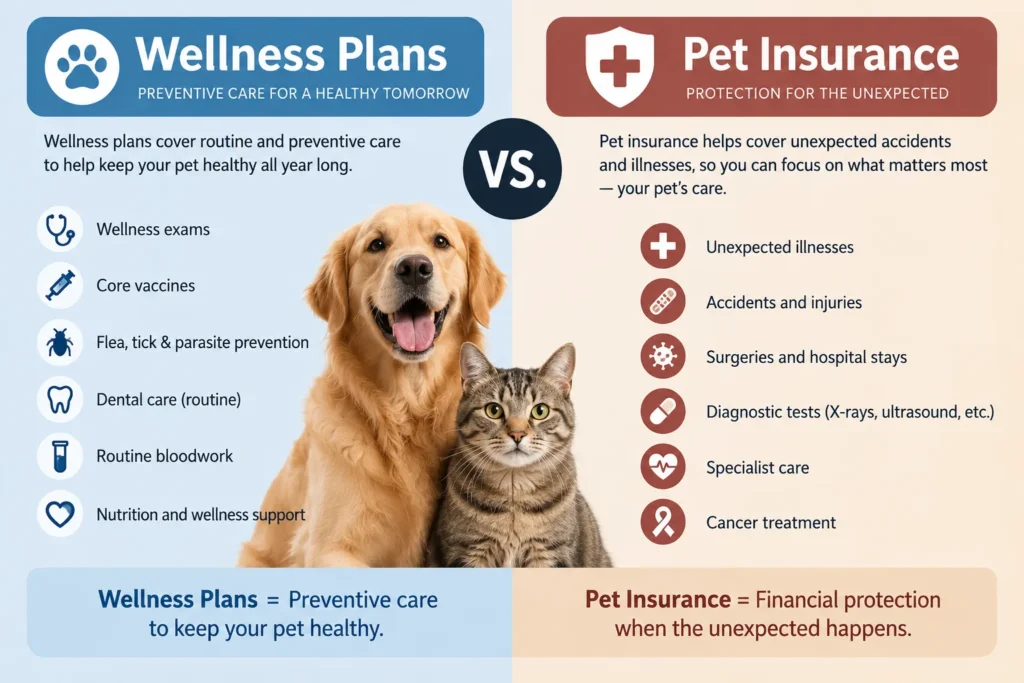
Pet insurance (accident-and-illness coverage) protects against unpredictable, unexpected veterinary costs: injuries, infections, cancer diagnoses, orthopedic conditions, emergency care. Wellness plans help you budget for routine, predictable preventive care: annual exams, vaccines, flea and tick prevention, heartworm testing, and sometimes dental cleanings. Healthy Paws puts it plainly: think of it like car insurance. It covers accidents, not oil changes or car washes.
Why the Coverage Categories Don’t Overlap
This detail trips people up most: a wellness plan won’t reimburse a torn ligament or a cancer diagnosis, and an accident-and-illness policy won’t pay for a routine annual exam. They aren’t competing tiers of the same product. Insurers structure them to address completely separate categories of spending. According to NAPHIA’s State of the Industry data, the large majority of pet insurance policies in the US are accident-and-illness plans, reflecting how strongly the industry, and most pet owners, prioritize protection against the expensive, unpredictable stuff first.
What Pet Insurance (Accident-and-Illness) Actually Covers
- Surgery and hospitalization.
- Diagnostics (bloodwork, imaging).
- Cancer treatment.
- Prescription medications for a covered condition.
- Specialist care.
- Emergency visits.
Cost: NAPHIA’s most recent full-year figures put the average accident-and-illness policy around $836/year for dogs ($70/month) and $435/year for cats ($36/month), up from prior years. These figures shift year to year and vary significantly by pet, breed, age, and location.
What Wellness Plans Actually Cover
- Annual wellness exams.
- Core vaccines (rabies, DHPP, and similar).
- Flea, tick, and heartworm prevention.
- Fecal exams and basic screenings.
- Sometimes: spay/neuter, dental cleanings, and microchipping, depending on the specific plan.
Cost: wellness add-ons attached to an insurance policy typically run $10-$37/month, with annual reimbursement limits ranging from $100 to $650 depending on the tier chosen. Standalone wellness plans not tied to insurance, like hospital-based membership programs, tend to run higher, roughly $35-$60/month, since they bundle in direct services rather than functioning as a reimbursement add-on.
Two Different Structures: Reimbursement vs. Bundled Service
This distinction is worth understanding before choosing. Most wellness add-ons attached to a pet insurance policy work like a mini version of insurance itself: you pay for the service, then get reimbursed up to your plan’s per-item or annual limit, with no deductible typically applied. Some standalone wellness plans, often tied to a specific veterinary hospital chain, work differently. You pay a flat monthly fee and the covered services are simply included when you visit that specific network, with no separate reimbursement step. The right structure for you depends partly on whether you’re loyal to one clinic or prefer the flexibility to see any vet.
Does a Wellness Plan Actually Save You Money?
Here’s the honest answer: a wellness plan’s main value isn’t necessarily saving money overall. It’s converting an unpredictable, occasionally large annual bill into smaller, predictable monthly payments. Whether it also saves money depends on doing the math for your specific pet. Add up what you’d typically spend annually on vaccines, exams, and preventive care, then compare that total to 12 months of wellness plan payments. For some pets, especially those needing several non-core vaccines, frequent parasite prevention, or a scheduled dental cleaning, the numbers can work out favorably. For a low-maintenance adult pet needing just an annual exam and core vaccines, out-of-pocket payment may end up cheaper than a monthly plan.
Which Insurers Offer Wellness Add-Ons (and Which Don’t)
Roughly half of major pet insurance providers offer a wellness add-on as of 2026, including Pets Best, ASPCA, Lemonade, Pumpkin, Embrace, and Spot. Notably, Healthy Paws and Trupanion don’t offer any wellness add-on. Both focus exclusively on accident-and-illness coverage with no routine care component at all. If preventive care reimbursement matters to you, these two providers aren’t viable options regardless of how strong their core accident-and-illness policy might be.
Why Most Guidance Recommends Getting Both
Nearly every source comparing these two products converges on the same practical advice: accident-and-illness coverage should come first, since it protects against the catastrophic, unpredictable costs that can reach into the thousands or tens of thousands of dollars. A wellness add-on works as a genuinely useful complement on top of that, not a replacement for it, and generally isn’t worth buying on its own if it would mean skipping accident-and-illness coverage entirely. Combining both means you’re protected against the expensive emergency scenario and have predictable monthly costs for the routine care you’re going to need anyway. Our pet insurance wellness add-on guide breaks down the specific math for deciding whether the add-on itself pays off.
When a Wellness Plan Might Not Be Worth It
- Your pet is young and low-maintenance, needing only a yearly exam and core vaccines. The math may favor paying out of pocket.
- You’re disciplined about setting aside money for routine care yourself and don’t need the “forced budgeting” structure a monthly plan provides.
- The annual reimbursement cap runs lower than what you’d realistically spend anyway. Check the specific per-item and annual limits before assuming the plan pays for itself.
Bottom Line: Pet Insurance vs Wellness Plans
Pet insurance and wellness plans aren’t two versions of the same thing. They’re designed to solve two different financial problems: unpredictable emergencies versus predictable routine care. Standard accident-and-illness insurance won’t reimburse an annual exam, and a wellness plan won’t touch a torn ligament or a cancer diagnosis. For most owners, prioritizing accident-and-illness coverage first, then adding a wellness plan if the math works out for your specific pet’s routine care needs, is the combination most financial and veterinary guides consistently recommend.
Frequently Asked Questions
Can I get a wellness plan without accident-and-illness insurance? Yes. Standalone wellness plans exist independent of insurance, though most guides recommend prioritizing accident-and-illness coverage first, since it protects against the much larger, unpredictable costs a wellness plan was never designed to cover.
Do wellness plans have a deductible like insurance does? Generally no. Wellness add-ons typically reimburse up to a set annual or per-item limit without a deductible, functioning more like a routine-care budget than traditional insurance.
Is it worth switching insurers just to get a wellness add-on? Not necessarily. First calculate whether your specific pet’s routine care spending would actually exceed the add-on’s monthly cost. If your current insurer, like Healthy Paws or Trupanion, doesn’t offer one, you can often still budget for routine care separately without needing to switch your core accident-and-illness coverage.
Sources referenced: Healthy Paws and NAPHIA (2026 reporting).