Vaccines rank among the more confusing parts of routine dog care, not because the science is complicated, but because the terminology around core vs non-core dog vaccines, and the pricing gap between a private vet, a low-cost clinic, and a wellness package, can leave owners unsure what’s actually necessary. Here’s a clear breakdown of both.
Core vs. Non-Core Dog Vaccines: The Distinction That Matters
The American Animal Hospital Association (AAHA) divides vaccines into two categories, and understanding this split is the key to not over- or under-vaccinating your dog.
- Core vaccines go to every dog, regardless of lifestyle, because the diseases they prevent run widespread, serious, and/or pose a public health concern, like rabies, which is transmissible to humans.
- Non-core vaccines depend on your dog’s specific lifestyle, geography, and exposure risk. A dog that frequents dog parks, boarding facilities, or wooded areas has different needs than one that rarely leaves a fenced yard.
The Core Vaccines Every Dog Needs
Rabies
Rabies vaccination is legally required in most US jurisdictions. It protects against a fatal viral disease that also poses a risk to humans. Vets typically give the first dose at 12-16 weeks, a booster at one year, then re-vaccinate every 1-3 years depending on state law and vaccine type. Cost runs $15-$100 per dose, with the wide range reflecting the gap between low-cost clinics ($15-$30) and private veterinary practices ($40-$100).
DHPP (Distemper, Hepatitis/Adenovirus, Parainfluenza, Parvovirus)
This combination vaccine protects against several serious diseases in one shot (AAHA treats the parainfluenza component as optional), including parvovirus, one of the most dangerous and expensive-to-treat illnesses a puppy can face. Puppies typically receive this in a series at 6-8, 10-12, and 14-16 weeks, with a booster at one year and then, per AAHA guidelines, every 3 years for adult dogs. Cost runs $15-$40 per dose at low-cost clinics, or $25-$96 at a private vet.
Leptospirosis
This vaccine’s classification changed recently. AAHA officially updated it from non-core to core status in 2024, reflecting rising disease prevalence and the fact that almost all dogs that go outdoors count as susceptible. This is a meaningful shift from its earlier non-core, lifestyle-dependent status. As one AAHA task force member put it, any dog that goes outdoors, whether in an urban or rural setting, can get exposed to leptospirosis.
Non-Core Vaccines: Based on Lifestyle, Not Universal
These depend entirely on your dog’s specific environment and activities:
- Bordetella (kennel cough) — recommended for dogs that visit boarding facilities, dog parks, groomers, or daycare, and often required by those facilities regardless of your own preference. AAHA guidelines call for annual boosters; some boarding or daycare facilities ask for it more often. Cost: roughly $20-$40 per dose.
- Lyme disease — tick-borne, recommended in areas with high tick exposure (wooded or grassy regions, particularly in the Northeast and upper Midwest). Cost: $20-$40 per dose.
- Canine influenza — often required for boarding, shows, or dogs with frequent social exposure to other dogs. Cost: $20-$40 per dose.
What a Full Puppy Vaccine Series Actually Costs
Puppies need multiple rounds rather than a single visit, so total first-year cost adds up meaningfully:
- Core vaccines only, puppy series (3-4 visits with DHPP at each): roughly $200-$400 in vaccine cost alone, not counting exam fees.
- Full first year including exam fees: commonly cited around $340-$510.
- Ongoing adult-dog core vaccines (after the puppy series): roughly $80-$200 a year, since DHPP boosters shift to a 3-year interval per AAHA guidelines rather than annual.
Private Vet vs. Low-Cost Clinic: The Real Price Gap
This ranks among the more significant, controllable cost factors:
| Setting | Core Vaccines (DHPP + Rabies) |
|---|---|
| Private veterinary practice | $75–$150 |
| Low-cost/community clinic | $15–$40 |
Many counties and nonprofit organizations run subsidized or even free vaccine clinics. Some target low-income households specifically (proof of public assistance sometimes required), while others stay open to any pet owner. Check your local animal services department or a nearby ASPCA-affiliated clinic before assuming full private-practice pricing is your only option.
A Cost-Saving Detail Worth Knowing: Booster Frequency
Adult dogs don’t necessarily need a DHPP booster every single year. AAHA guidelines support a 3-year interval for DHPP in fully-vaccinated adult dogs, meaning an annual DHPP booster may not be medically necessary for every dog. Ask your vet directly whether your dog needs the DHPP booster on a 1-year or 3-year schedule, since over-vaccinating costs money and, while rare, carries some unnecessary risk of vaccine reaction. Rabies revaccination timing, by contrast, follows state law and vaccine type, not discretionary the same way.
Titer Testing: An Alternative Worth Knowing About
For DHPP specifically, a titer test ($75-$200) can measure your dog’s existing antibody levels and confirm continued protection without an unnecessary revaccination. This can prove useful for dogs that have had vaccine reactions in the past, though titer testing isn’t legally accepted as a substitute for rabies vaccination in most jurisdictions, regardless of antibody levels shown.
A Note on Small Breeds and Vaccine Timing
Small breed dogs face somewhat higher risk for vaccine reactions, particularly when receiving multiple vaccines in a single visit. If your small dog needs several vaccines at once, ask your vet about spacing them across two separate visits instead. This simple, no-cost adjustment can reduce reaction risk.
Does Pet Insurance Cover Core vs Non-Core Dog Vaccines?
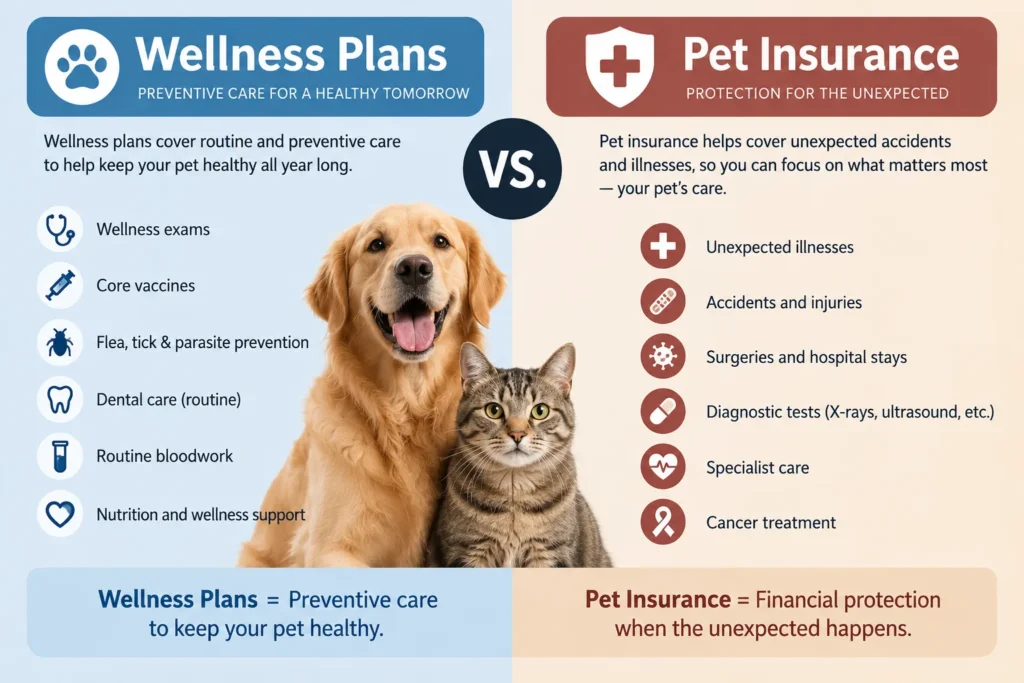
Generally, no. Standard accident-and-illness pet insurance policies don’t cover routine vaccines, since insurers classify them as preventive/wellness care rather than treatment for an accident or illness. Some insurers offer optional wellness add-ons that reimburse vaccine costs, typically capped around $20-$150 per year. Factor this in if you’re comparing quotes and want vaccine costs included in your coverage. Our pet insurance wellness add-on guide covers whether that add-on math actually works in your favor.
Bottom Line on Core vs Non-Core Dog Vaccines
Every dog needs the same core protection: rabies, DHPP, and now leptospirosis, regardless of lifestyle, typically running $75-$150 at a private vet or $15-$40 at a low-cost clinic. Non-core vaccines like Bordetella, Lyme, and canine influenza depend entirely on your dog’s specific environment and activities. Discuss them individually with your vet rather than defaulting to either “get everything” or “skip everything optional.” Vaccination stays inexpensive relative to treating the diseases it prevents, since parvovirus treatment alone can run into the thousands, making this one of the highest-value, most cost-effective categories of routine pet care.
Frequently Asked Questions
Does my dog need Bordetella if it never goes to a dog park? Not necessarily on its own merits, but many boarding facilities, groomers, and daycares require it regardless of your dog’s typical routine. Check requirements before assuming it’s unnecessary for your situation.
Is it safe to skip an annual DHPP booster? For fully-vaccinated adult dogs, AAHA guidelines support a 3-year interval rather than annual boosters. Raise this as a reasonable question with your vet rather than assuming yearly revaccination is always required.
Can a titer test replace my dog’s rabies vaccine? No. While titer testing can confirm antibody levels for vaccines like DHPP, it isn’t accepted as a legal substitute for rabies vaccination in most areas, regardless of what the test shows.
Sources referenced: AAHA (2026 reporting).