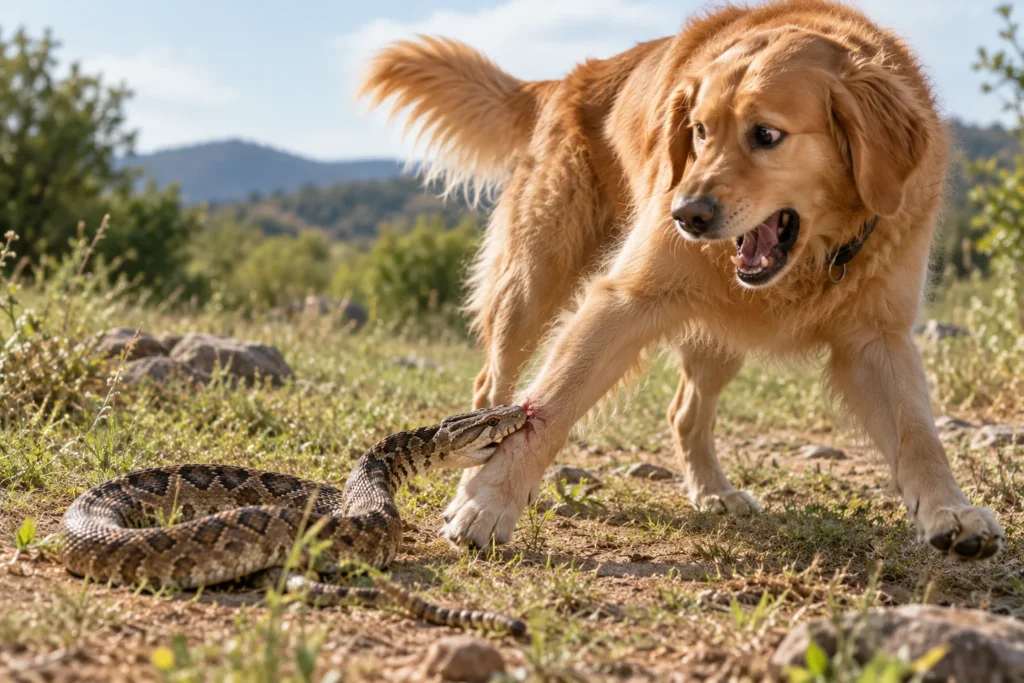
A dog can go from sniffing curiously in the brush to swelling, crying, and struggling to breathe in under an hour after a venomous snake bite. According to the AVMA, these bites occur most frequently across the southern and western United States, especially in the warmer months, prime hiking and outdoor-activity season for a lot of dog owners. Here’s what snake bite treatment cost for dogs actually looks like, and why the answer depends almost entirely on one question: was it venomous?
Venomous vs. Non-Venomous: The Cost Fork in the Road
Vets treat non-venomous bites with wound cleaning, antibiotics, and anti-inflammatory medication, costing a few hundred dollars for the visit. Venomous bites fall into a different category entirely. They involve antivenin, close monitoring, and often hospitalization, realistically running $500 to $5,000 or more, depending primarily on antivenin dosing and length of hospital stay.
Antivenin: The Single Biggest Cost Driver
This is where the bill escalates quickly. ASPCApro confirms that Crotalidae Polyvalent Immune Fab (CroFab) ranks among the most commonly used antivenin products in the US for pit viper bites: rattlesnakes, copperheads, and cottonmouths. Antivenom costs around $400 to $800 a vial, according to the American Kennel Club; most dogs need one vial, but many need two or more, so the antivenin alone can run into the thousands before diagnostics, fluids, hospitalization, or monitoring even get added.
What Full Treatment Actually Includes
Beyond antivenin, a venomous snake bite visit typically involves:
- Emergency exam and IV catheter placement.
- Bloodwork and clotting tests — critical for pit viper bites specifically, since venom can affect the body’s ability to clot properly.
- Pain medication, often opioid-level, given how painful these bites are.
- Anti-nausea medication.
- IV fluids, and hospitalization for 8 to 48 hours in many cases for monitoring.
- Oxygen support, if breathing is affected.
- Wound care and follow-up rechecks in the days after, if tissue damage develops, meaning the total cost isn’t always finalized at discharge.
What Makes a Snake Bite Treatment Cost for Dogs Higher or Lower
- Bite location. A bite to the face causes more swelling and carries greater airway concern than a bite to a leg, often requiring more intensive monitoring.
- Severity of systemic symptoms. Dogs showing shock, breathing trouble, worsening bruising, or abnormal clotting need more extensive lab work and closer, more expensive monitoring.
- Dog size. Smaller dogs generally face more severe reactions relative to the amount of venom injected, sometimes requiring more aggressive treatment.
- Geography. Emergency hospitals in high-cost metro areas, or regions with especially frequent rattlesnake cases, may carry different facility fees and antivenin inventory costs.
- Snake type. Coral snake bites run rarer and mechanistically different (neurotoxic rather than the more common hemotoxic pit viper venom), requiring a different, sometimes harder-to-source antivenin.
The Rattlesnake Vaccine: Does It Actually Save Money?
A toxoid vaccine targeting Western Diamondback rattlesnake venom is available and marketed as reducing bite severity. It is given as initial doses plus boosters, and the AKC notes it has not been shown to make a significant difference in outcomes. It’s worth staying clear-eyed about what the evidence actually shows: research on its effectiveness runs mixed, it doesn’t prevent a bite from happening, and studies don’t consistently show it eliminates the need for antivenin treatment afterward. Most emergency vets report that vaccinated dogs still require treatment; they may simply need somewhat less antivenin and show better early outcomes. For dogs in high-risk, rattlesnake-dense areas (Arizona, Texas, Colorado mountain regions), it can work as a reasonable part of an overall risk-reduction approach, but it shouldn’t replace getting to a vet immediately after any suspected bite.
What to Do Immediately
- Call your vet or the nearest emergency clinic right away and specifically ask whether they carry antivenin. Not every clinic stocks it, and driving further to a clinic that has it can be worth the extra time.
- Antivenin works best given immediately, but remains effective hours, even days, after a bite, so don’t assume it’s “too late” if you can’t reach a clinic instantly.
- Prepare for upfront payment. With the possible exception of your own longtime regular vet, it’s extremely unlikely an emergency clinic will treat your dog without payment upfront. Many offer CareCredit or similar financing, worth asking about by phone on the way in.
- Ask about the treatment protocol directly. Proper care generally includes bloodwork to assess severity and pain management, with antivenin used when clinically indicated, a legitimate question to ask if a proposed treatment plan seems unclear.
Does Pet Insurance Cover Snake Bites?
Yes. Most policies specifically include snake bite emergencies as an example of a covered accident, meaning even accident-only plans typically cover the immediate emergency (exam, antivenin, hospitalization), while accident-and-illness plans may also help with any later complications or follow-up wound care. As with any claim, coverage details, including deductible, reimbursement rate, annual limit, and whether follow-up care is included, vary by provider, so check those specifics directly. If you live in rattlesnake country, hike frequently, or have a curious outdoor dog, this ranks as a genuinely high-value coverage category to confirm before you need it.
Bottom Line on Snake Bite Treatment Cost for Dogs
A venomous snake bite realistically costs $500 for a milder case up to $5,000-$7,200+ for a severe bite requiring multiple antivenin vials and extended hospitalization, with antivenin itself as the dominant line item on the bill. This kind of accident strikes suddenly and unpredictably, and treatment can’t wait for a decision to be made. That makes it a clear example of the kind of emergency a standing accident or accident-and-illness policy is specifically built to help absorb, provided you already had coverage in place before the bite happened.
Frequently Asked Questions
Is it too late for antivenin if I can’t get to a vet immediately? No. Antivenin works best given right away, but it remains effective hours, and even days, after a bite. Getting to any vet with antivenin available as soon as possible is still the right move, even if there’s some delay.
Does the rattlesnake vaccine mean my dog won’t need antivenin if bitten? No. Most emergency vets report vaccinated dogs still require treatment, though they may need somewhat less antivenin and show better early outcomes. The vaccine works as a risk-reduction tool, not a substitute for emergency care after a bite.
Will accident-only pet insurance cover a snake bite? Generally yes. Policies typically cite snake bites as a covered example under accident coverage, meaning even basic accident-only plans should cover the immediate emergency treatment, subject to your policy’s deductible and reimbursement terms.
- Emergency Vet Cost vs Regular Vet in 2026
- What Counts as a Pet Emergency vs. a Regular Vet Visit
- Emergency Vet Costs for Heatstroke in Dogs
Sources referenced: ASPCApro and American Kennel Club (2026 reporting).